
Bonjour
Between Fire and Tradition: The Magical Night of St John in Portugal🇵🇹
Welcome to the pulsating heart of the festivities 🎉 of Saint John's Day in Portugal, an event that transforms the shortest night of the year into a spectacular celebration of traditions, fires, and conviviality. In Portugal, this ancestral festival, which takes place around June 24, is marked by emblematic rituals that merge local folklore with celebrations that extend from dusk until dawn.
Saint John's Day, known locally as São João, is famous for its popular dances, colorful processions, and impressive bonfires where participants jump over the flames in the hope of purifying the spirit and bringing good luck for the coming year. An essential part of the festival is also the meal: the streets fill with aromas of grilled sardines and meat skewers, while pasteis de nata and other local sweets delight the taste buds of revelers.
This celebration 🎇 is not limited to a simple gathering; it is a pillar of Portuguese culture, reflecting the richness of heritage and the importance of community traditions. Each city and village brings its own touch to the festival, making Saint John's Day a mosaic of customs that paints a vivid picture of Portugal's cultural diversity.
Join us to explore how Saint John's Day is celebrated in Portugal, a spectacle of joy and sharing that lights up the night and warms hearts.
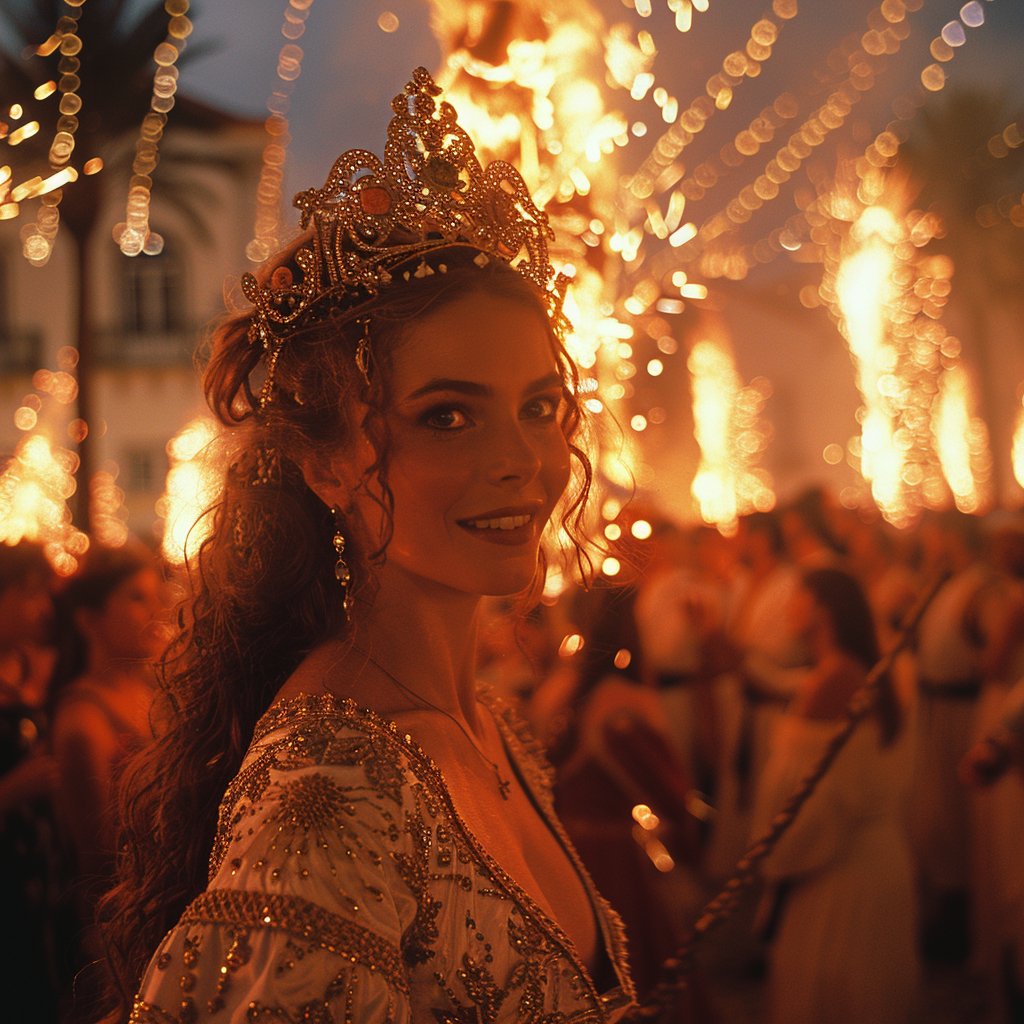
Let's delve into the historical roots and fascinating origins of the Feast of Saint John 🌟 in Portugal, a celebration that blends both Christian tradition and pagan heritage. This chapter reveals how the Portuguese transformed an ancient festival into a vibrant symbol of their culture and identity.
Saint John, or São João in Portuguese, has its origins in pagan rituals celebrating the summer solstice, the time when days are longest and nights shortest of the year. This period was traditionally associated with the fertility of the earth and the celebration of light.
With the arrival of Christianity, these ancient practices were integrated into the Christian calendar in honor of Saint John the Baptist. The date of June 24 was chosen to coincide with Saint John's supposed birth, six months before that of Jesus, reflecting the biblical verse that says John must "decrease" as Jesus must "increase."
Over the centuries, the traditions associated with Saint John's Day have evolved but have always retained their essence as a festival of light and fire. In particular, in Portugal, this festival 🎊 has been enriched with local customs that vary from region to region, offering a mosaic of unique celebrations.
This chapter also explores how Saint John's Day has become an integral part of Portuguese identity, marking the beginning of summer each year with hope and renewal. Through the festival, communities come together to celebrate, sharing meals, dances, and of course, the captivating spectacle of bonfires.
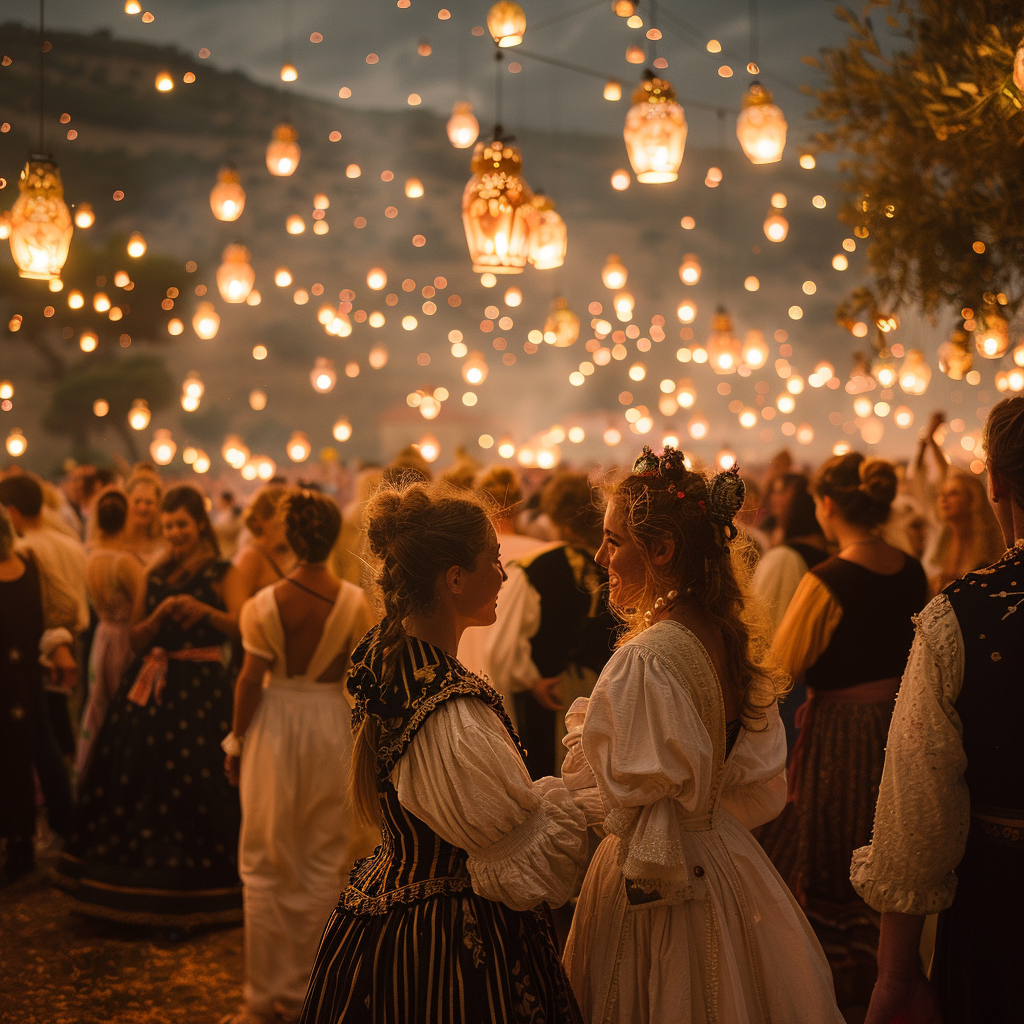
Let's discover together the rituals and traditions 🎆 that make Saint John's Day in Portugal such a unique and unforgettable celebration. Each region brings its personal touch to this celebration, creating a vibrant patchwork of customs that illuminate the shortest night of the year.
One of the most emblematic elements of Saint John's Day is the bonfire, or 'fogueiras'. Symbolizing purification and renewal, these fires are an opportunity for participants to jump over the flames, an act believed to bring luck and health for the coming year. 🌟
In addition to bonfires, the festival is also marked by communal meals where grilled sardines and caldo verde dominate the menus, reflecting the richness of Portuguese gastronomy during the festivities. The streets also come alive with the sound of plastic hammers in Porto, a recent but indispensable addition to symbolize joy and fun.
In some cities, such as Porto, the night is lit not only by bonfires but also by magnificent fireworks reflected on the Douro river, while thousands of paper lanterns rise into the sky, carrying the wishes of the revelers. 🎇
Saint John's Day is also a time of superstitions and magic. Many take advantage of this night to perform rituals believed to attract love or good fortune, by writing wishes on pieces of paper which they then burn in the flames.
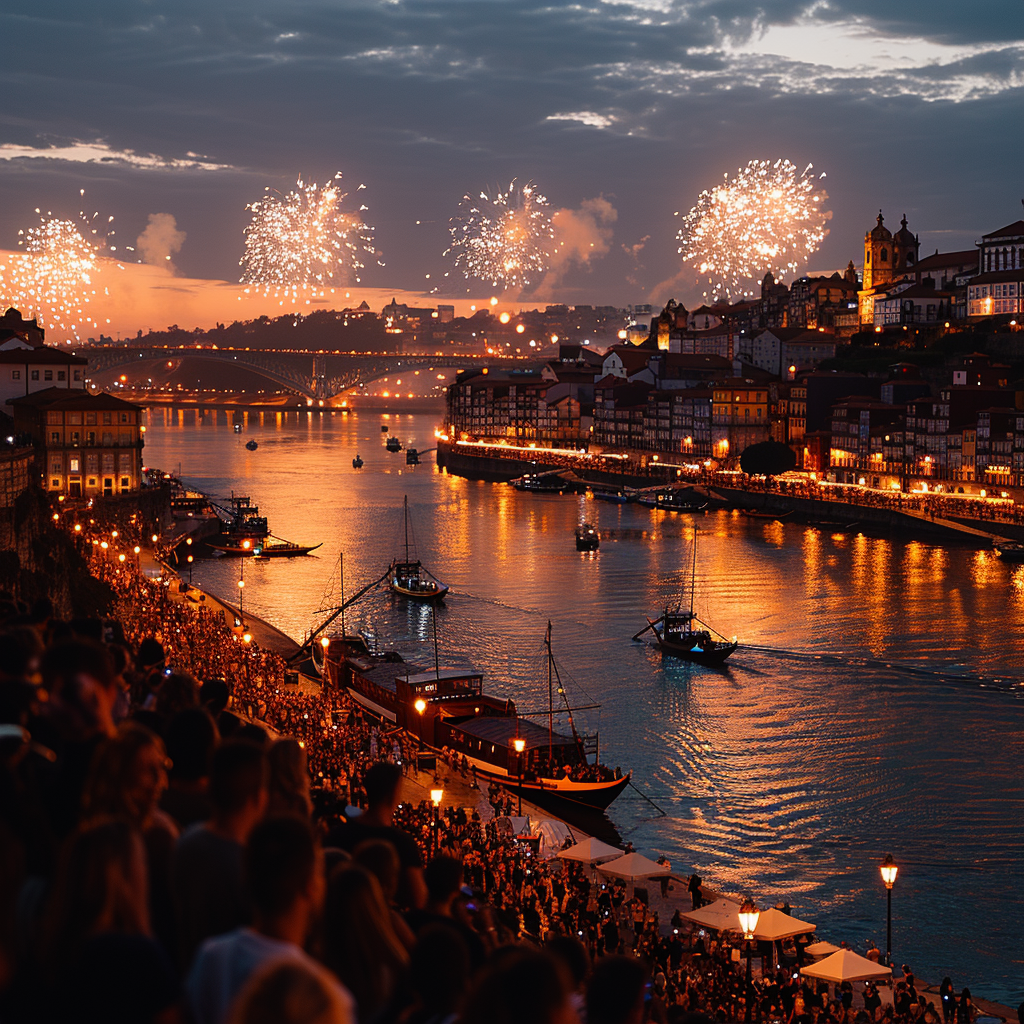
Porto, la deuxième plus grande ville du Portugal, célèbre la Saint-Jean 🎉 d'une manière qui la distingue nettement des autres villes. Cette fête y est non seulement une tradition, mais un véritable point d'orgue de l'année pour ses habitants, attirant des visiteurs de tout le pays et de l'étranger.
Les festivités à Porto sont célèbres pour leur exubérance et leur richesse. Le point central est le spectaculaire feu d'artifice lancé depuis le pont Dom Luis, illuminant le ciel nocturne et se reflétant dans les eaux du Douro. Les rues vibrent au son des concerts en plein air, des fanfares et des groupes de musique folklorique, créant une atmosphère électrisante. 🎆
Un autre élément caractéristique de la Saint-Jean à Porto est l'utilisation des petits marteaux en plastique que les gens utilisent pour se tapoter gentiment la tête les uns des autres, une coutume récente mais devenue emblématique de la fête. Cette pratique, alliée à la traditionnelle bataille de fleurs, ajoute une touche ludique et unique à la célébration.
Les repas de rue jouent également un rôle crucial dans les festivités, avec des stands proposant des sardines grillées, des brochettes de viande, et bien sûr, les célèbres pasteis de nata. Les traditions culinaires enrichissent l'expérience, offrant un aperçu savoureux de la gastronomie locale.
À Porto, la Saint-Jean est plus qu'une fête; c'est une expression de l'identité culturelle de la ville, une nuit où chaque coin de rue offre une expérience différente, mais toujours joyeuse et accueillante. 🥳
During Saint John's Day, Portuguese gastronomy takes centre stage in the festivities, offering a feast of flavours that delights palates and highlights the richness of Portugal's culinary traditions. 🍽️
The night of Saint John's Day is synonymous with conviviality and sharing around typical dishes that bear witness to Portuguese cultural identity. In Porto and throughout the country, the streets transform into open-air buffets where grilled sardines take pride of place. Accompanied by broa de milho, a traditional corn bread, these sardines are often eaten directly on the sidewalks, adding to the festive and relaxed atmosphere. 🐟
Caldo verde, a creamy soup made with kale, potatoes and thin slices of chorizo, is another must-have on this night. This comforting dish is traditionally served during celebrations and gatherings, symbolising Portuguese hospitality and generosity.
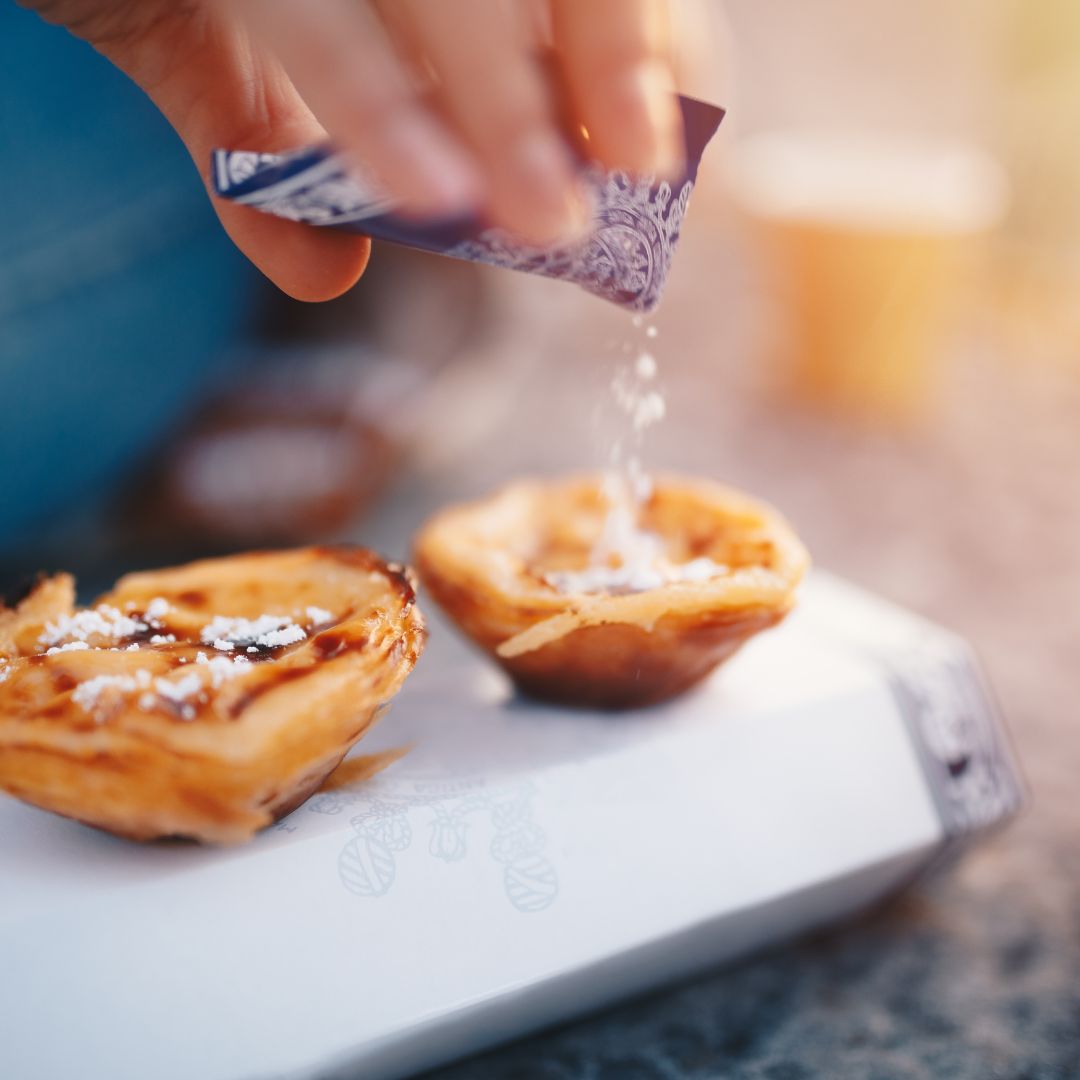
The festivities also include a wide variety of sweet treats, among which pasteis de nata hold a special place. These small crème brûlée tarts are a true emblem of Portuguese pastry and are never missing on great occasions. 🍮
Finally, no Saint John's Day feast would be complete without the entertainment that accompanies these meals. From traditional music to folk dances, every aspect of the celebration is a celebration of Portuguese culture, making Saint John's Day an unforgettable experience for all who participate.
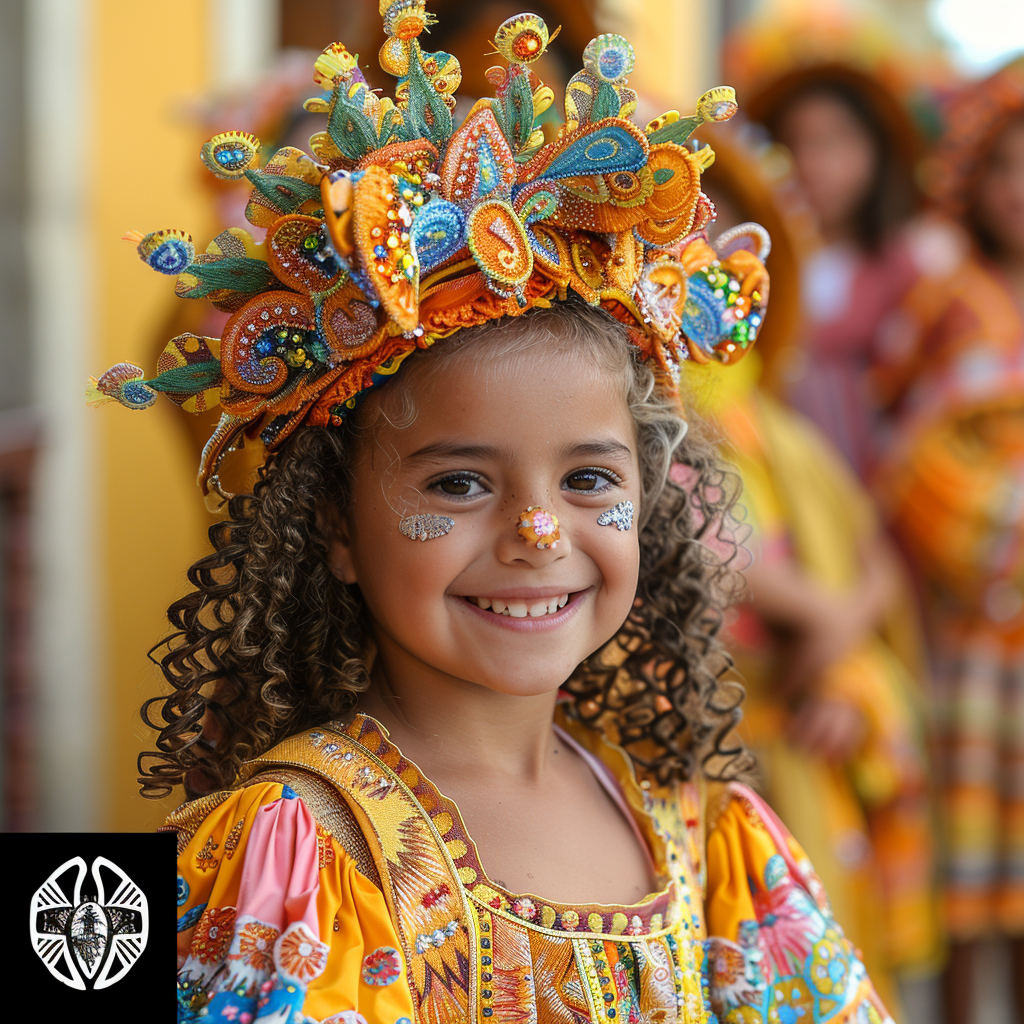
The Saint-Jean, far more than a simple festival, plays a crucial role in the cultural and social fabric of Portugal. 🇵🇹 This celebration perfectly illustrates how traditions can strengthen community identity and foster unity across the country.
Culturally, the Saint-Jean helps perpetuate ancestral customs, which are passed down from generation to generation. Every aspect of the festival – from bonfires to folk dances, through shared meals – is an expression of Portuguese collective memory. These traditions not only help reinforce the sense of belonging to a community, but also keep alive the local language and cultural practices.
On a social level, the Saint-Jean is a driver of social cohesion. It brings together people of all ages and backgrounds, creating spaces for dialogue and sharing that transcend usual social divides. 🤝 During this night, differences fade away in favor of a common celebration, where everyone can participate equally in joy and good humor.
The impact on tourism is also significant. The Saint-Jean festivities attract visitors from all over the world, eager to discover this cultural richness. This stimulates the local economy, particularly in Porto, where the spectacular dimension of the festival makes it a major tourist attraction. 🌍
In summary, the Saint-Jean reflects the importance of traditional festivities in building and strengthening social and cultural ties. It shows how a festival can be a vector of social and economic development, while remaining a powerful symbol of a nation's identity.
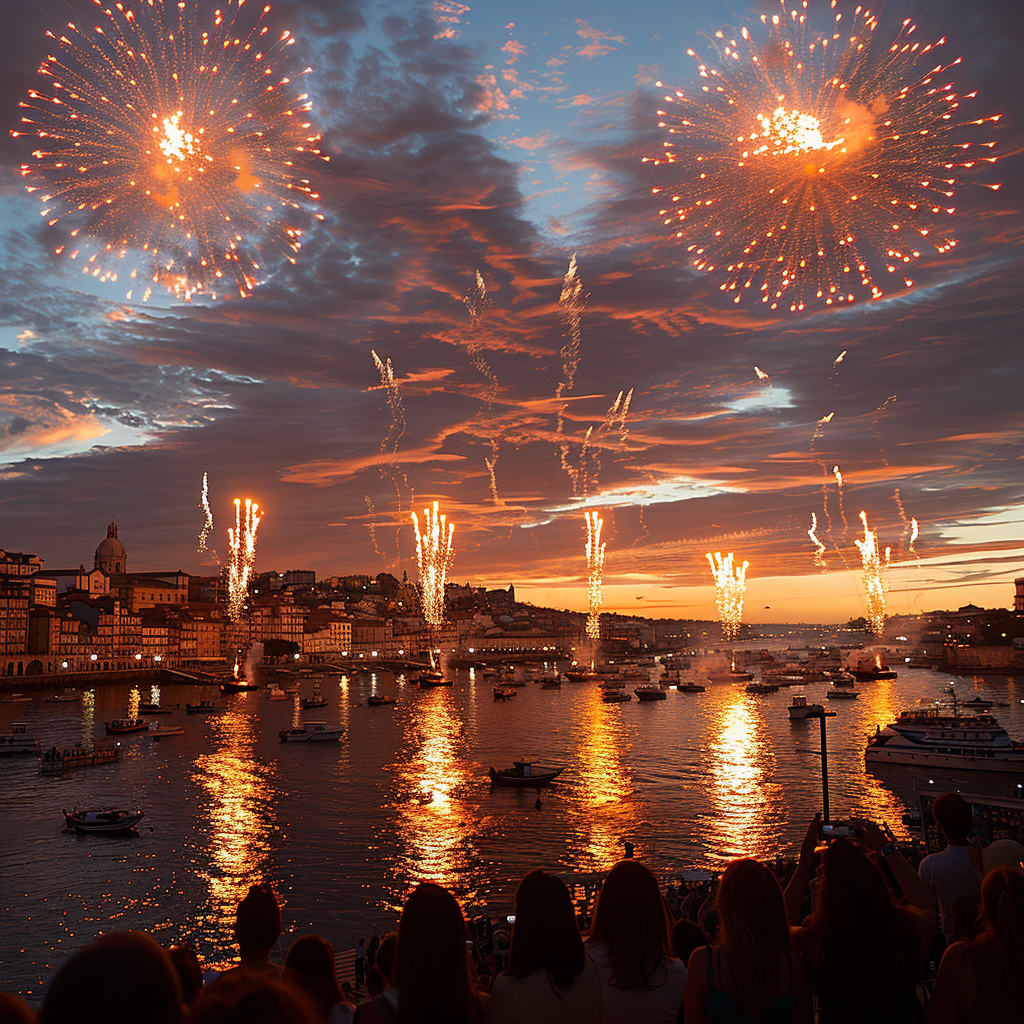
In summary, Saint John's Day in Portugal is much more than just a celebration; it is a true cultural and social phenomenon that weaves the bonds of the community through ancestral traditions and modern festivities. 🌟 This celebration perfectly illustrates how traditions can live and thrive in a contemporary world, enriching the social and cultural life of the Portuguese.
Every lit torch, every grilled sardine, and every plastic hammer brandished are not just festive gestures, but symbols of a shared history and identity. Saint John's Day is a vibrant reminder of the joy and resilience of communities, affirming that, despite the advances of the modern world, traditional roots remain deeply embedded. 🎇
For those who have had the chance to participate in this magical festival, the memories of Saint John's Day will continue to inspire and warm hearts. For others, it remains an open invitation to discover Portugal at its brightest and most joyous.
We hope that this article has not only informed you about the richness of the Saint John's Day festivities in Portugal but also inspired you to explore these traditions in person. Share your experiences and photos of Saint John's Day, and let's continue to celebrate global cultural heritage together. 🌍💖
Let's delve into the historical roots and fascinating origins of the Feast of Saint John 🌟 in Portugal, a celebration that blends both Christian tradition and pagan heritage. This chapter reveals how the Portuguese transformed an ancient festival into a vibrant symbol of their culture and identity.
Saint John, or São João in Portuguese, has its origins in pagan rituals celebrating the summer solstice, the time when days are longest and nights shortest of the year. This period was traditionally associated with the fertility of the earth and the celebration of light.
With the arrival of Christianity, these ancient practices were integrated into the Christian calendar in honor of Saint John the Baptist. The date of June 24 was chosen to coincide with Saint John's supposed birth, six months before that of Jesus, reflecting the biblical verse that says John must "decrease" as Jesus must "increase."
Over the centuries, the traditions associated with Saint John's Day have evolved but have always retained their essence as a festival of light and fire. In particular, in Portugal, this festival 🎊 has been enriched with local customs that vary from region to region, offering a mosaic of unique celebrations.
This chapter also explores how Saint John's Day has become an integral part of Portuguese identity, marking the beginning of summer each year with hope and renewal. Through the festival, communities come together to celebrate, sharing meals, dances, and of course, the captivating spectacle of bonfires.
Let's discover together the rituals and traditions 🎆 that make Saint John's Day in Portugal such a unique and unforgettable celebration. Each region brings its personal touch to this celebration, creating a vibrant patchwork of customs that illuminate the shortest night of the year.
One of the most emblematic elements of Saint John's Day is the bonfire, or 'fogueiras'. Symbolizing purification and renewal, these fires are an opportunity for participants to jump over the flames, an act believed to bring luck and health for the coming year. 🌟
In addition to bonfires, the festival is also marked by communal meals where grilled sardines and caldo verde dominate the menus, reflecting the richness of Portuguese gastronomy during the festivities. The streets also come alive with the sound of plastic hammers in Porto, a recent but indispensable addition to symbolize joy and fun.
In some cities, such as Porto, the night is lit not only by bonfires but also by magnificent fireworks reflected on the Douro river, while thousands of paper lanterns rise into the sky, carrying the wishes of the revelers. 🎇
Saint John's Day is also a time of superstitions and magic. Many take advantage of this night to perform rituals believed to attract love or good fortune, by writing wishes on pieces of paper which they then burn in the flames.
Porto, la deuxième plus grande ville du Portugal, célèbre la Saint-Jean 🎉 d'une manière qui la distingue nettement des autres villes. Cette fête y est non seulement une tradition, mais un véritable point d'orgue de l'année pour ses habitants, attirant des visiteurs de tout le pays et de l'étranger.
Les festivités à Porto sont célèbres pour leur exubérance et leur richesse. Le point central est le spectaculaire feu d'artifice lancé depuis le pont Dom Luis, illuminant le ciel nocturne et se reflétant dans les eaux du Douro. Les rues vibrent au son des concerts en plein air, des fanfares et des groupes de musique folklorique, créant une atmosphère électrisante. 🎆
Un autre élément caractéristique de la Saint-Jean à Porto est l'utilisation des petits marteaux en plastique que les gens utilisent pour se tapoter gentiment la tête les uns des autres, une coutume récente mais devenue emblématique de la fête. Cette pratique, alliée à la traditionnelle bataille de fleurs, ajoute une touche ludique et unique à la célébration.
Les repas de rue jouent également un rôle crucial dans les festivités, avec des stands proposant des sardines grillées, des brochettes de viande, et bien sûr, les célèbres pasteis de nata. Les traditions culinaires enrichissent l'expérience, offrant un aperçu savoureux de la gastronomie locale.
À Porto, la Saint-Jean est plus qu'une fête; c'est une expression de l'identité culturelle de la ville, une nuit où chaque coin de rue offre une expérience différente, mais toujours joyeuse et accueillante. 🥳
During Saint John's Day, Portuguese gastronomy takes centre stage in the festivities, offering a feast of flavours that delights palates and highlights the richness of Portugal's culinary traditions. 🍽️
The night of Saint John's Day is synonymous with conviviality and sharing around typical dishes that bear witness to Portuguese cultural identity. In Porto and throughout the country, the streets transform into open-air buffets where grilled sardines take pride of place. Accompanied by broa de milho, a traditional corn bread, these sardines are often eaten directly on the sidewalks, adding to the festive and relaxed atmosphere. 🐟
Caldo verde, a creamy soup made with kale, potatoes and thin slices of chorizo, is another must-have on this night. This comforting dish is traditionally served during celebrations and gatherings, symbolising Portuguese hospitality and generosity.
The festivities also include a wide variety of sweet treats, among which pasteis de nata hold a special place. These small crème brûlée tarts are a true emblem of Portuguese pastry and are never missing on great occasions. 🍮
Finally, no Saint John's Day feast would be complete without the entertainment that accompanies these meals. From traditional music to folk dances, every aspect of the celebration is a celebration of Portuguese culture, making Saint John's Day an unforgettable experience for all who participate.
The Saint-Jean, far more than a simple festival, plays a crucial role in the cultural and social fabric of Portugal. 🇵🇹 This celebration perfectly illustrates how traditions can strengthen community identity and foster unity across the country.
Culturally, the Saint-Jean helps perpetuate ancestral customs, which are passed down from generation to generation. Every aspect of the festival – from bonfires to folk dances, through shared meals – is an expression of Portuguese collective memory. These traditions not only help reinforce the sense of belonging to a community, but also keep alive the local language and cultural practices.
On a social level, the Saint-Jean is a driver of social cohesion. It brings together people of all ages and backgrounds, creating spaces for dialogue and sharing that transcend usual social divides. 🤝 During this night, differences fade away in favor of a common celebration, where everyone can participate equally in joy and good humor.
The impact on tourism is also significant. The Saint-Jean festivities attract visitors from all over the world, eager to discover this cultural richness. This stimulates the local economy, particularly in Porto, where the spectacular dimension of the festival makes it a major tourist attraction. 🌍
In summary, the Saint-Jean reflects the importance of traditional festivities in building and strengthening social and cultural ties. It shows how a festival can be a vector of social and economic development, while remaining a powerful symbol of a nation's identity.
In summary, Saint John's Day in Portugal is much more than just a celebration; it is a true cultural and social phenomenon that weaves the bonds of the community through ancestral traditions and modern festivities. 🌟 This celebration perfectly illustrates how traditions can live and thrive in a contemporary world, enriching the social and cultural life of the Portuguese.
Every lit torch, every grilled sardine, and every plastic hammer brandished are not just festive gestures, but symbols of a shared history and identity. Saint John's Day is a vibrant reminder of the joy and resilience of communities, affirming that, despite the advances of the modern world, traditional roots remain deeply embedded. 🎇
For those who have had the chance to participate in this magical festival, the memories of Saint John's Day will continue to inspire and warm hearts. For others, it remains an open invitation to discover Portugal at its brightest and most joyous.
We hope that this article has not only informed you about the richness of the Saint John's Day festivities in Portugal but also inspired you to explore these traditions in person. Share your experiences and photos of Saint John's Day, and let's continue to celebrate global cultural heritage together. 🌍💖
Produit
Contactez-nous