Good morning
The Pastel de Nata: Simple Flan or Inimitable Portuguese Delight? 🇵🇹 🥘
🥐 The Pastel de Nata: a simple custard tart or a Portuguese treasure? 🇵🇹 If you think the pastel de nata is just a variation of a custard tart, think again! This gem of Portuguese pastry offers much more than just simple flavors. With its crispy puff pastry and its creamy, lightly caramelized custard, the pastel de nata delights the taste buds like no other dessert. 🌍 Discover why this specialty straight from Portugal has become a culinary symbol appreciated all over the world! 😋
1. Origins and history of Pastel de Nata
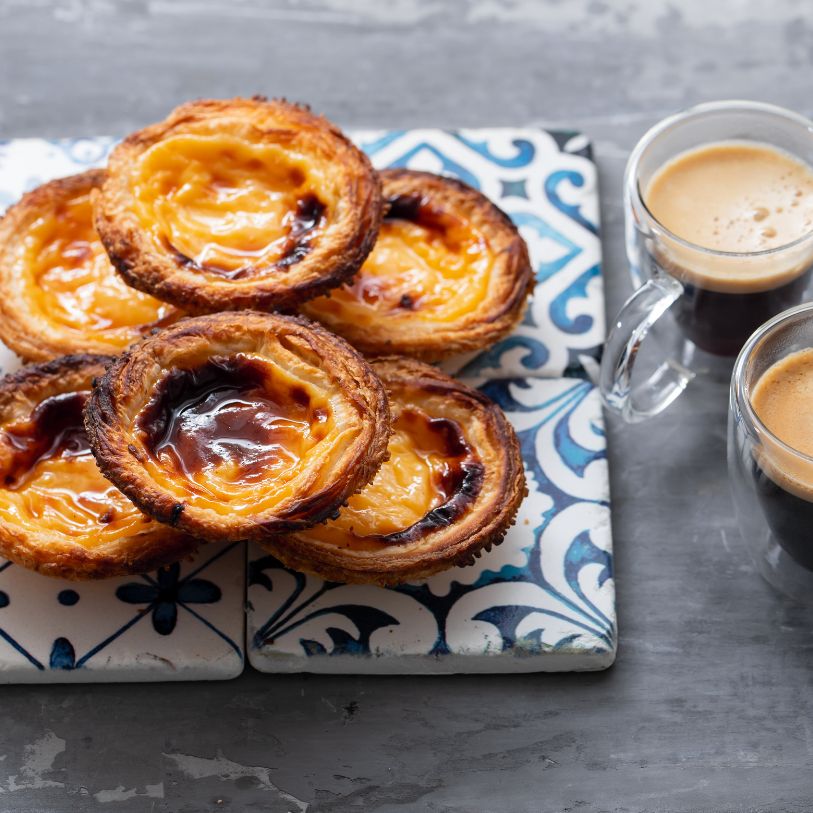
The pastel de nata is far more than a simple dessert. It boasts a rich history, dating back over 200 years, rooted in the monasteries of Portugal, more precisely in the famous Jerónimos Monastery, in Belém, a district of Lisbon. At the time, the monks used considerable quantities of egg whites to starch their clothes, leaving a surplus of egg yolks. Rather than wasting them, they began using them to create pastries, including the famous pastel de nata.
The first pastel de nata was made in the early 19th century. After the dissolution of the monasteries in 1834, the monks sold the recipe to a sugar refinery that opened the Fábrica de Pastéis de Belém in 1837. This iconic place, still in operation today, is known for its pastéis de Belém, a specific version of pastéis de nata whose recipe remains a closely guarded secret
This dessert quickly gained popularity beyond Portuguese borders, largely thanks to Portuguese explorations and migrations. Today, variations of the pastel de nata can be found in countries like Brazil and even in Macau, where a slightly different version called the Macanese egg tart has become very popular
Thus, the pastel de nata has become an essential symbol of Portuguese pastry, appreciated throughout the world for its unique blend of crispy flaky crust and creamy filling, often caramelized on top and sprinkled with cinnamon.

2. Composition and Differences Between Pastel de Nata and Flan
Although pastel de nata and flan share a similar base of eggs, milk, and sugar, their differences in preparation and presentation are significant. Let's start with flan, a dessert known for its smooth, silky texture, often made with a simple base of eggs, milk, and sugar. It is slow-cooked in a bain-marie, which gives it a firm, homogeneous consistency, with a smooth surface sometimes topped with caramel.
In contrast, pastel de nata, a true emblem of Portugal, stands out with its crispy puff pastry, which serves as the base for a creamy filling made from egg yolks, sugar, milk, and flour. What makes pastel de nata unique is its high-temperature baking, which creates a caramelized crust on top, while maintaining a lighter, melt-in-your-mouth cream inside
Another major point of divergence is the crust. Flan is generally prepared without a crust, while pastel de nata relies on puff pastry, providing a crispy texture that contrasts with the sweetness of the cream. This combination of textures – the crispness of the pastry and the creaminess of the filling – makes all the difference and contributes to the unique sensory experience of pastel de nata
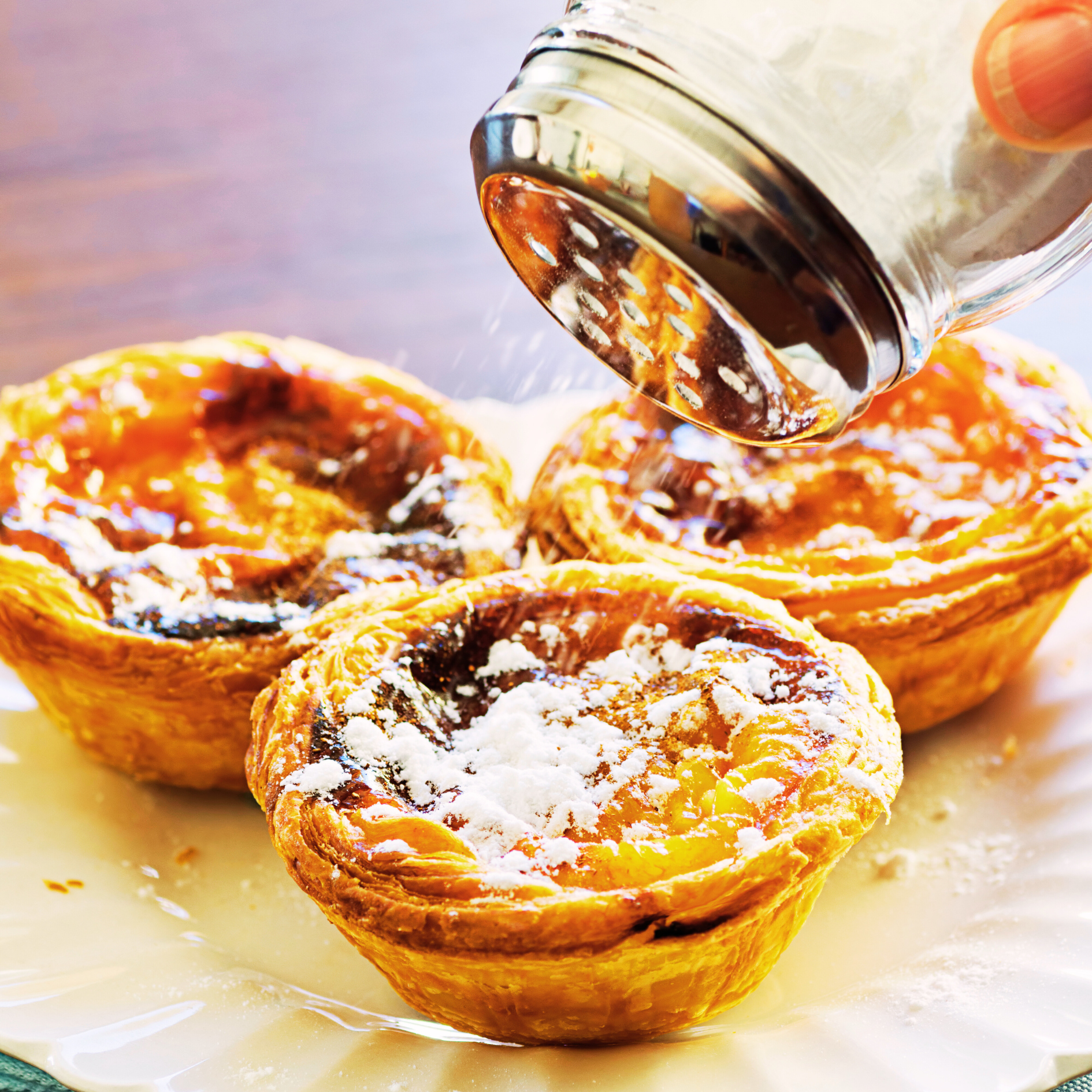
Furthermore, flan is often served cold, while pastel de nata is enjoyed warm, fresh out of the oven, which accentuates the crispness and the contrast with the creamy sweetness of the interior. The addition of cinnamon and sometimes powdered sugar on pastel de nata adds an extra dimension of flavor that is absent from traditional flan.
In summary, even though these two desserts share a similar base of ingredients, pastel de nata stands out for its texture, cooking method, and complex flavors, making it a pastry in its own right and a true treasure of Portuguese gastronomy.

3. Distinct flavors and textures
One of the main differences between pastel de nata and flan lies in their distinct tastes and textures, which offer completely different sensory experiences.
Flan, with its smooth and uniform texture, is known for its simple sweetness. It has a more subtle taste, often accentuated by a layer of caramel, but remains quite homogeneous in the mouth. Its preparation in a bain-marie gives it a dense and firm texture, while allowing it to retain a freshness that makes it pleasant to enjoy cold
In contrast, pastel de nata, a true emblem of Portugal, offers a much more contrasting richness of flavors and textures. Its crispy puff pastry shell is one of the characteristics that makes it unique, providing a crunch that contrasts with the creamy custard inside. The creamy filling, slightly caramelized on top due to high-temperature baking, offers a more complex taste than flan, with notes of eggs and milk, often enhanced with a touch of cinnamon
Pastel de nata is generally enjoyed warm, straight out of the oven, which amplifies the crispy effect of the pastry and the melting sweetness of the cream. This contrast is one of the reasons why it is considered a much more complex dessert than flan. Additionally, pastel de nata often has a slightly burnt finish on top, providing an additional depth of flavor not found in a flan
In summary, flan offers a simple sweetness and uniform texture, while pastel de nata, with its contrasts of textures and aromatic complexity, offers a richer and more varied taste experience, making it an icon of Portuguese pastry.
4. The pastel de nata: An iconic Portuguese pastry
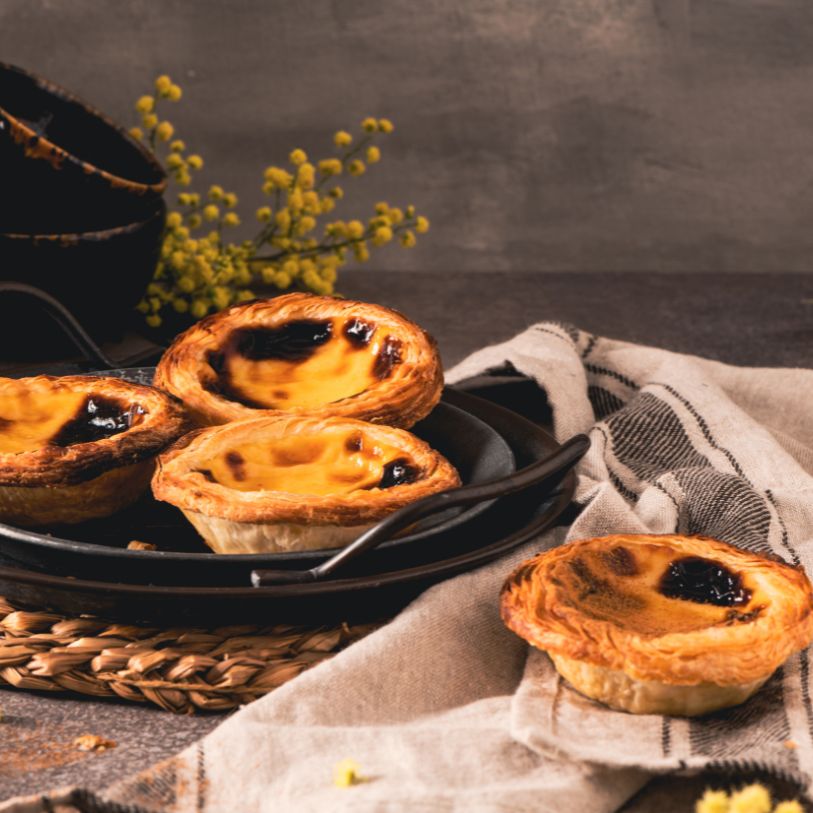
The pastel de nata is much more than a simple dessert; it embodies the soul and culinary tradition of Portugal. Having become one of the country's most emblematic symbols, it is appreciated not only by locals but also by the millions of tourists who visit Portugal each year. This dessert, initially created in Portuguese monasteries in the 19th century, has crossed borders and is now internationally renowned
The importance of the pastel de nata in Portuguese culture is undeniable. In Lisbon, the district of Belém has become a pilgrimage site for those wishing to taste the famous pastéis de Belém, made according to the original secret recipe. Every day, the Fábrica de Pastéis de Belém attracts crowds, and tourists from all over the world queue to savor this dessert in its most authentic form
But beyond Belém, the pastel de nata has established itself in other countries thanks to the Portuguese diaspora and explorers who brought this culinary savoir-faire with them. It can now be found in bakeries around the world, from Macau to Brazil, as well as in major European and American cities
Wikipedia. The pastel de nata has thus gained worldwide recognition while remaining a key element of Portugal's gastronomic identity.
In summary, the pastel de nata is not just a dessert, it is an ambassador of Portuguese gastronomy. Its incomparable crunchiness and creaminess have made it an essential pastry, celebrated for its history and rich flavors, in Portugal and far beyond
Good morning
Conclusion
So, is the pastel de nata just a simple flan? The answer is no. Although these two desserts share a similar ingredient base, their differences in terms of texture, preparation, and especially history are fundamental. The flan, though an international classic, remains simpler in its conception, with a soft and smooth texture that lacks the contrast the pastel de nata offers thanks to its crispy puff pastry and caramelized top.
The pastel de nata, on the other hand, embodies the excellence of Portuguese gastronomy, combining the richness of a creamy custard with the lightness of a crispy pastry. It has become an essential pastry in Portugal, celebrated worldwide for its complex flavors and unique texture.
Santana TAFlake Bakery. This dessert, much more than a simple flan, is a true culinary experience that deserves to be savored for what it is: an inimitable delight, a symbol of Portuguese culture.
If you have never tasted a pastel de nata, now is the perfect time to discover this iconic specialty from Portugal and understand why it delights pastry lovers around the world.
Produit
Contactez-nous